Sir We Have an Orc Problem Enemies and Orc Scaling
How the horde grows from hundreds to six figures - and what that means for your turret line.
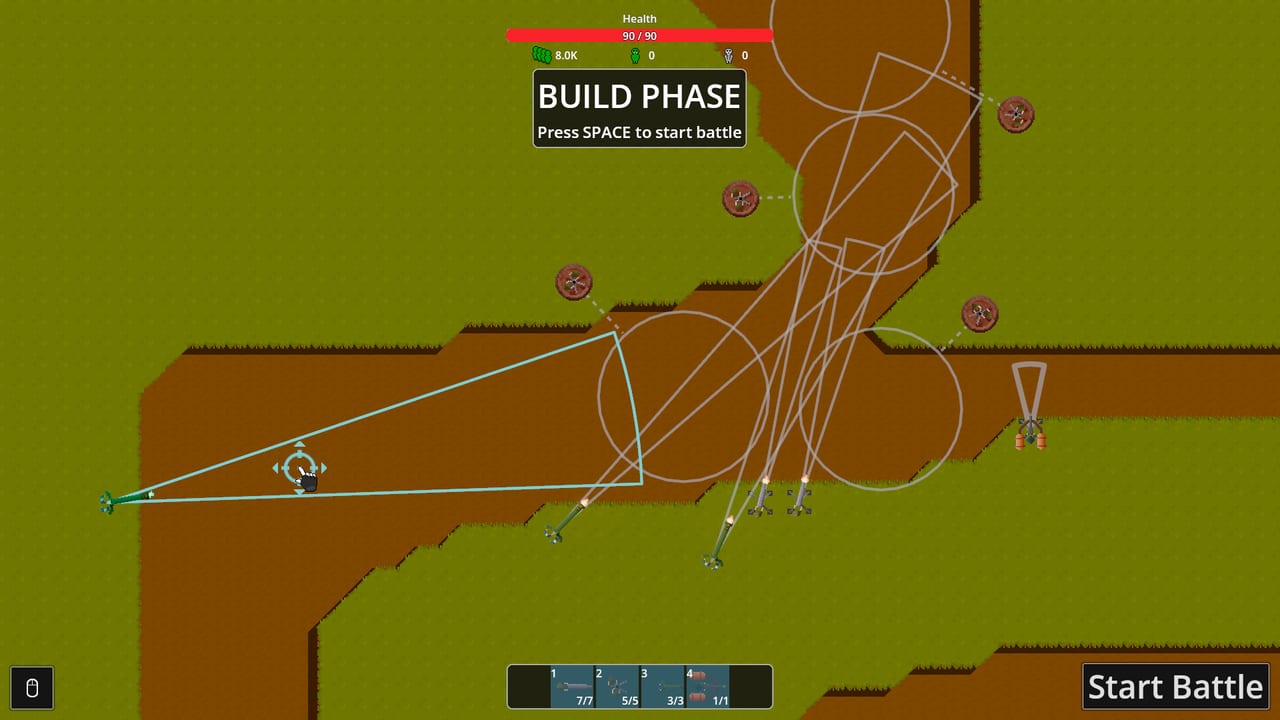
Why enemy scaling matters
Sir, We Have an Orc Problem is built on one mechanical premise: orcs come in absurd numbers and those numbers get worse every level. The Steam store description says “tens of thousands of troops” and the finale delivers over one hundred thousand in a single wave. Understanding how the horde scales - count, speed, and density - is the difference between a turret line that holds and one that collapses at the same timestamp every attempt.
This page covers what the game throws at you and when. Pair it with Getting Started for first-session controls and Choke Points for how to funnel what you learn here into kill zones.
The core scaling axis: move speed per level
The June 12 demo patch made orc move speed increase per level. That single line in the changelog reshaped the entire meta: a Gunner placement that comfortably holds level two can leak on level four even if your upgrade tree barely changed. Speed scaling means:
- Orcs spend less time in kill zones
- Flamethrower cone exposure shortens
- Mortar lead timing compresses
- Gaps between turret coverage widen as enemies traverse faster
If a layout that worked yesterday suddenly leaks, the cause is usually speed, not DPS. Rebuild the choke before buying another damage node. Details on geometry live in Choke Points and Tips and Tricks.
Enemy counts by campaign phase
The game communicates enemy counts through the level select screen icons added in the June demo patch. Exact numbers vary by build, but the general escalation follows this pattern:
| Phase | Approximate count range | Key challenge |
|---|---|---|
| Tutorial / Level 1 | Hundreds | Learning placement, first Gunner line |
| Early (Levels 2-3) | Low thousands | Split paths, first Flamethrower unlock |
| Mid (Levels 4-5) | Tens of thousands | Speed ramps, dual kill zones, Mortar timing |
| Late campaign | 50,000 - 100,000+ | Orbital lasers, nukes, full tree required |
| Finale | Six figures | Everything maxed, ability timing critical |
Your meta tree should keep pace with these jumps. Level 4 Walkthrough and Level 5 Walkthrough detail the transition from manageable to overwhelming. Late-Game Walkthrough covers six-figure waves.
How orcs move: fluid dynamics, not lanes
Unlike classic tower defense where enemies follow fixed lanes, orcs in Sir, We Have an Orc Problem move like a dense fluid. They spread across open terrain, compress at choke points, and flow around obstacles. This has practical implications:
- Scatter placement fails - spreading Gunners evenly across a wide front lets orcs walk between sparse cones
- Choke compression works - natural narrow points force orcs into overlapping fire from Flamethrowers, Mortars, and Cannons
- Rebuilding matters - after a scout run, fluid pathing may shift; what looked like the obvious choke may not be where the density peaks
Treat every new map as a fluid simulation. Place minimal towers, watch the flow, then rebuild for the real compression points. Choke Points covers funnel identification in depth.
Density and why it changes mid-wave
Orc density is not constant during a battle. Early in a wave, orcs trickle in small groups. Mid-wave, path merges create density spikes where hundreds of orcs occupy a few tiles. Late-wave stragglers thin out.
This matters because:
- AoE abilities (missiles, bombing runs, orbital lasers) deal maximum value during density spikes
- Flamethrowers apply burn to every orc in their cone - high density means more tags per second
- Mortars deal splash damage - clusters multiply effective DPS
- Gunner penetration shots travel through stacked enemies
If you fire a bombing run into a thin trickle, you waste most of the area. Wait for the merge. See Bombing Runs for targeting timing and Flamethrower Strategy for cone placement during density peaks.
What makes late-game orcs dangerous
Late-campaign orcs combine three scaling factors simultaneously:
- Higher base speed from per-level scaling
- Higher counts reaching six figures
- Longer paths to kill because speed reduces time-in-zone
The result is a wave that arrives faster, lasts longer, and overwhelms static lines. Solutions:
- Full meta tree - economy upgrades from early game fund late combat nodes
- Double-pass Flamethrower - make every orc burn at least twice before reaching base
- Ability timing - save orbital lasers and nukes for the densest merge, not the first trickle
- Rebuild discipline - late maps may require tower repositioning mid-campaign, not just mid-wave
Beat Hard Levels covers recovery plans when leaks happen late. Meta Farming Runs explains how to fund the expensive late nodes.
Orc types and special variants
The core enemy is a standard orc running toward your base. Demo tooltips reference:
- Golden orcs - rare variants that drop bonus resources when killed (unlock gated in the meta tree)
- Explosive orcs - orcs that carry explosives and detonate on death, damaging nearby enemies (meta unlock with percentage chance)
These variants add depth without changing the fundamental scaling. Golden orcs reward kill speed; explosive orcs turn dense clumps into chain reactions that can help or hurt depending on positioning. Treat them as bonuses, not threats to design around.
Reading the level select screen
Before starting a map, the level select screen shows:
- Enemy count iconography (added June 2026 patch)
- Map preview or visual hint of path layout
- Previous attempt results if you cleared or failed before
Use this information to plan your meta spend. If enemy count jumps from 10,000 to 40,000 between two levels, your Gunner line needs a corresponding DPS jump from the upgrade tree - usually penetration, fire rate, or Flamethrower caps. Upgrade Priority sequences those purchases.
Scaling versus skill
Forum debates sometimes frame difficulty as a pure stat check. It is not. Scaling interacts with:
- Placement geometry - the same towers in different positions produce vastly different results
- Ability timing - one well-placed bombing run can save a run that looked doomed
- Rebuild willingness - players who refuse to reposition after a scout run lose to scaling that placement could solve
- Economy order - buying combat nodes before economy nodes slows the very upgrades that beat scaling
Stats help. Geometry helps more. The combination is what the incremental loop rewards. Flamethrower Strategy and Tips and Tricks cover the geometry side.
Demo patches that changed scaling
Two June 2026 demo patches directly affected how enemies feel:
- June 12 - Orc move speed now increases per level; Flamethrower tick reliability improved but tick damage decreased
- June 4 - Level 5 visuals improved; Bonus Resources surrender rule changed
These patches are baked into the full release. Treat older YouTube footage (pre-June) as potentially outdated for speed and Flamethrower balance. Our embedded videos on Getting Started and Level 5 Walkthrough use post-patch footage.
Full changelog: Patch Notes.
Related pages
- Getting Started - first map orientation
- Choke Points - funnel design against fluid movement
- Flamethrower Strategy - softening dense waves
- Beat Hard Levels - recovery when scaling overwhelms
- Upgrade Priority - spending to match enemy growth
Frequently Asked Questions
Quick answers to the most common questions.
Do orcs get faster each level?
Yes. The June 12 demo patch added per-level orc move speed scaling. A layout that holds on one map may leak on the next even with the same upgrades.
How many orcs are in the final level?
Six figures - over 100,000 in a single wave. The campaign ramps from hundreds in the tutorial to that number across roughly four to six hours.
What are golden orcs?
Rare variants that drop bonus resources when killed. They appear after unlocking a meta-tree node with a percentage chance to spawn.
Why does my Gunner line leak on later maps?
Usually speed scaling, not DPS. Orcs move faster each level so they spend less time in kill zones. Rebuild the choke placement before buying more damage.